About MiRO

Who we are Energy for the Southwest

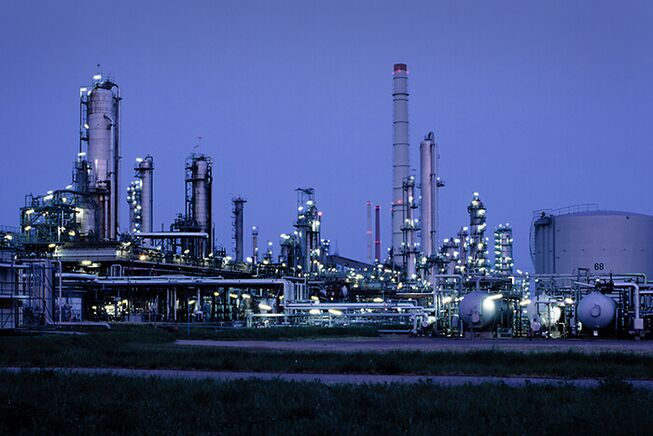
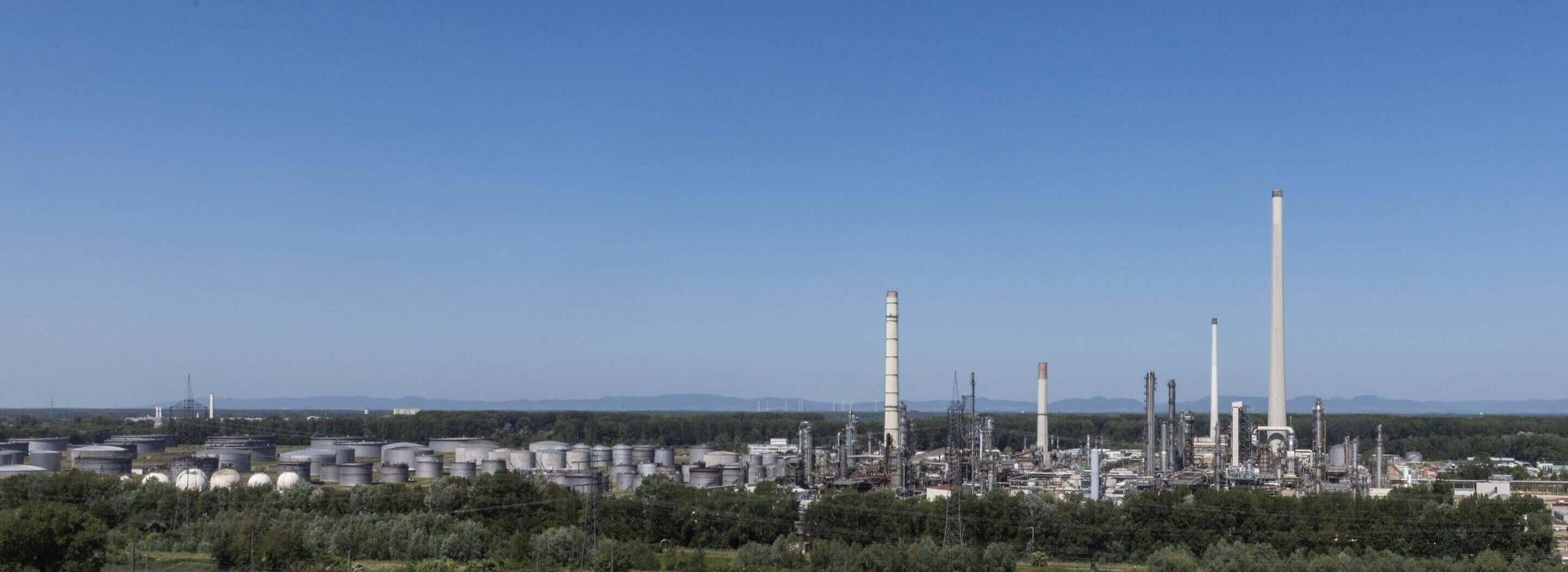
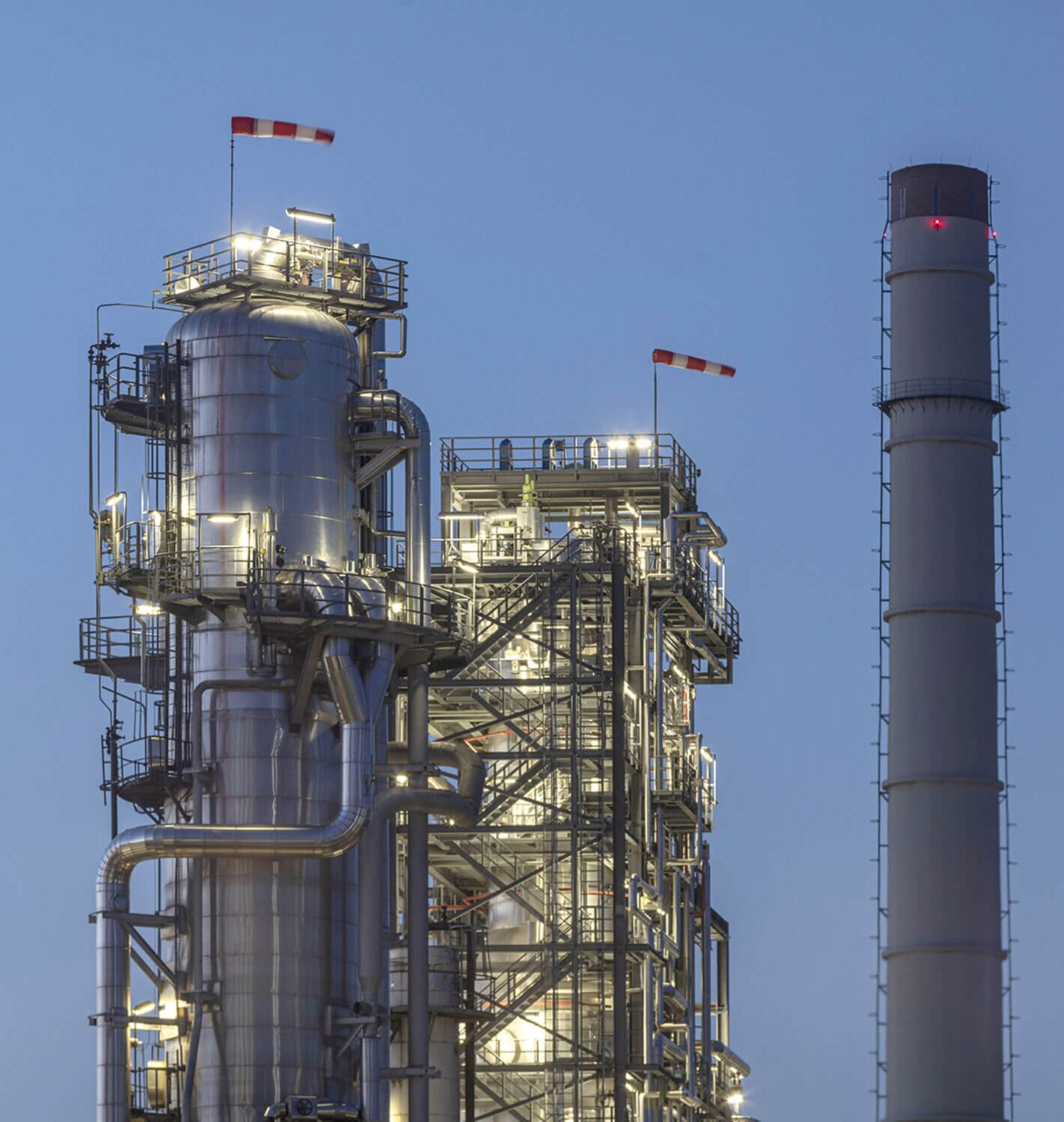
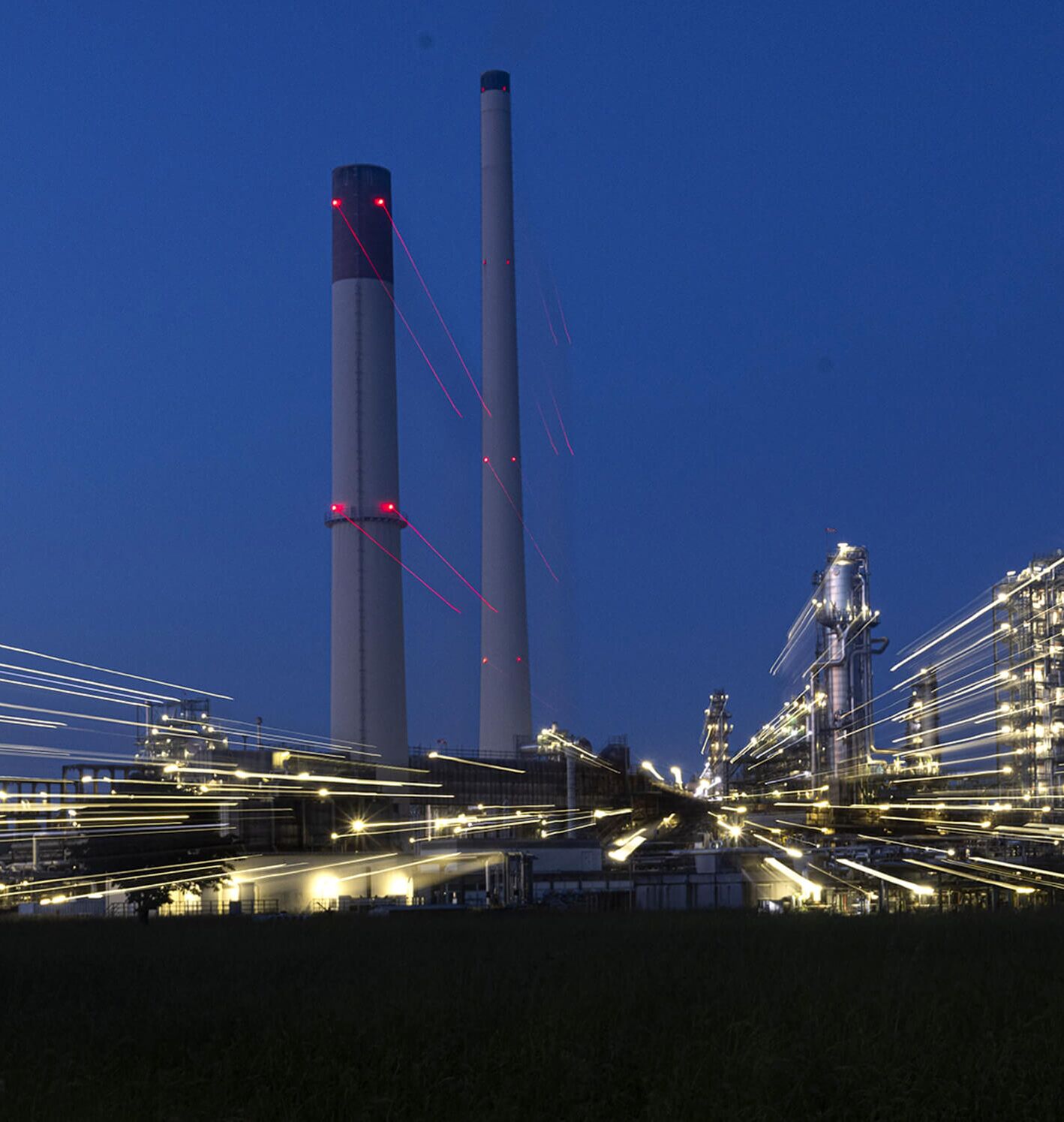
The Mineraloelraffinerie Oberrhein (MiRO) in Karlsruhe is Germany's largest refinery and one of the leading and most efficient refineries in Europe.

Our employees are key to our company's success. Their qualifications, knowledge and experience are the foundation for reliable and efficient refinery operations.

Our 1,100 employees refine crude oil into products such as gasoline, diesel, heating oil, bitumen and input materials for the chemical industry – around 15 million tons per year. On average, every 3rd litre of petrol and every 8th litre of diesel fuel at German petrol pumps as well as every 3rd tonne of bitumen originate from our production.

Engine for the economy, progress and quality of life

Every day, MiRO supplies around 10 million consumers with fuels and heating oil. This makes us the largest source for energy in the southwest of Germany. Statistically, our products cover around 45% of the primary energy demand in Baden-Württemberg.

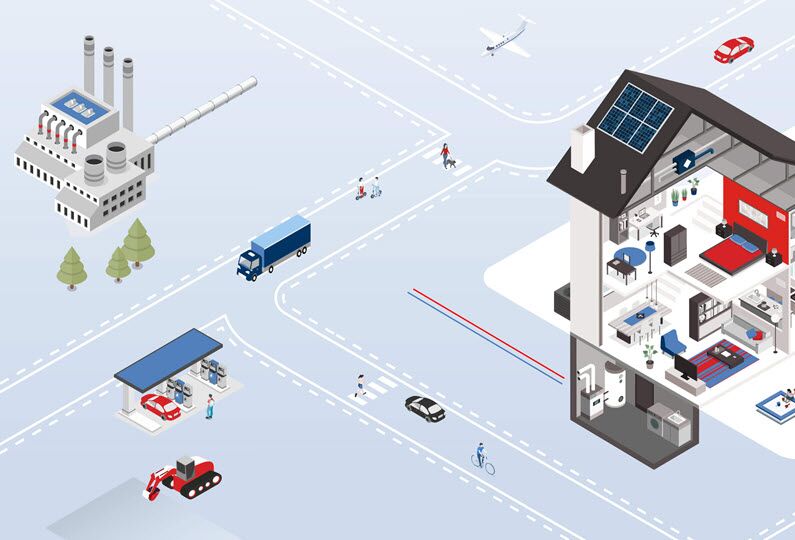
In addition, our refinery supplies process waste heat into the municipal district heating network. We cover around 60% of the district heating demand in Karlsruhe and thus provide cosy warmth for over 40,000 households.

We see ourselves as a partner in the energy transition journey. With projects such as district heating integration and the continuous reduction of internal energy consumption, our refinery is already making a valuable contribution to reducing CO2 emissions.

As one of the largest employers in Karlsruhe, an excellent training company, taxpayer and client for regional companies, MiRO is also an important economic factor for the region.

Our products – as diverse as life

Our energy products ensure mobility, provide power for machines, enable transport of goods and ensure a warm home. Our products are also used in road construction and as raw materials in the chemical industry. Our society encounters materials based on crude oil on a daily basis, for example in yoghurt pots, computers, car interiors or spectacle frames, but also in textiles for sportswear, medicines and cosmetics.

What drives us

As Germany's largest refinery, we play a key role in ensuring a secure energy supply in the southwest. We are a proud partner of society, and at the same time we face up to the responsibility associated with it every day. Our ambition is to produce the products we need for people and companies as efficiently and environmentally friendly as possible. MiRO will continue to reliably provide mobility and energy products for the southwest in the future – through economical and affordable energy sources that are increasingly produced sustainably.

Our self-image

Our company principles aim at our neighbours, shareholders, customers, partner companies, business partners, authorities and the interested public in general. These summarize our self-image and our ambitions and serve as a guideline for all our employees. The success of MiRO bases on the personal commitment of each individual.

Our Shareholders

  • Shell Deutschland GmbH

  • Esso Deutschland GmbH

  • Rosneft Deutschland GmbH*

  • Phillips 66 Continental Holding GmbH

*) Under the trusteeship of the Federal Network Agency (BNetzA) since September 16, 2022
Executive Management

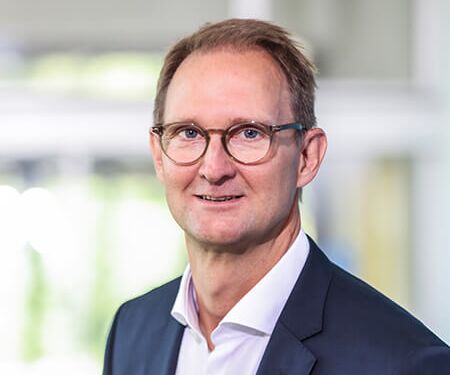
Dr. Andreas Krobjilowski

Technical Managing Director and Spokesman of the Management Board

Dr. Andreas Krobjilowski

Technical Managing Director and Spokesman of the Management Board

Dr. Andreas Krobjilowski studied mechanical engineering at the Technical University of Hamburg-Harburg. After graduating as a graduate engineer, he first worked as a research assistant in the field of production technology at the University of Bremen, where he also earned his doctorate. In December 2003 he then joined Shell and started his industry career.

Dr. Krobjilowski began his eighteen-year career there at the Cologne Shell refinery, where he held a number of operational positions. In 2012, he moved to Shell's Fredericia refinery in Denmark as Production Manager. Two years later, he took over responsibility as General Manager for the site. From March 2018 onwards, Dr. Krobjilowski was the General Manager of Shell Jurong Island, a production site for petrochemical intermediates in Singapore.

Since September 2021, Dr. Andreas Krobjilowski has been Technical Managing Director and Spokesman of the MiRO Management Board.
Christoph Moser

Commercial Director

Christoph Moser

Commercial Director

Christoph Moser, who holds a degree in business administration (FH), joined MiRO in 1996 after completing his studies at the University of Applied Sciences in Worms. He initially held various management positions in the areas of shipping and scheduling as well as finance and accounting at the refinery before taking over as Head of Human Resources in June 2018. Christoph Moser has been Commercial Director of MiRO since January 2023 and will continue to head the Human Resources department in this position.

Chronicle

Karlsruhe refinery site – more than 60 years of driving the economy, progress and quality of life far beyond the region.

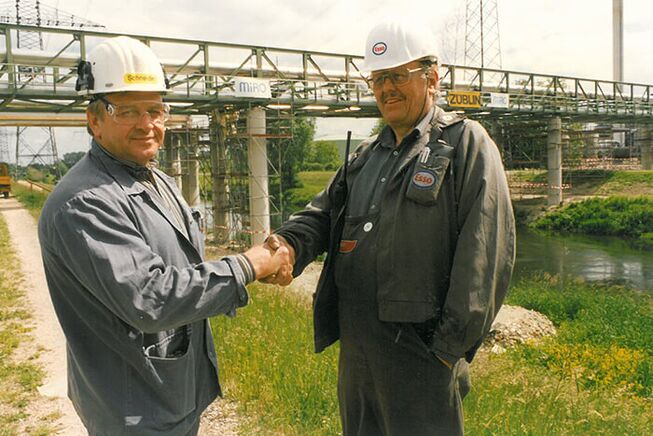
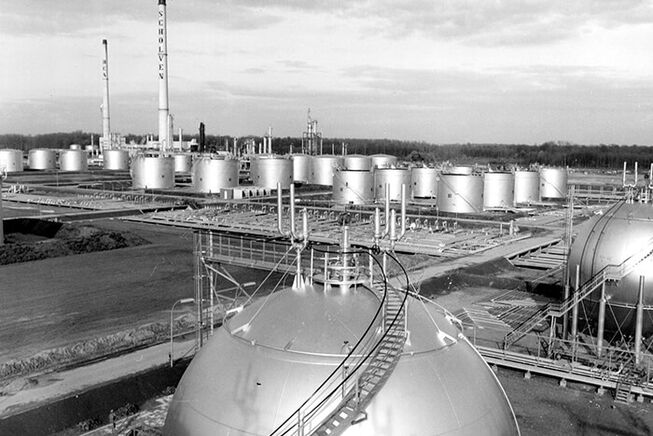
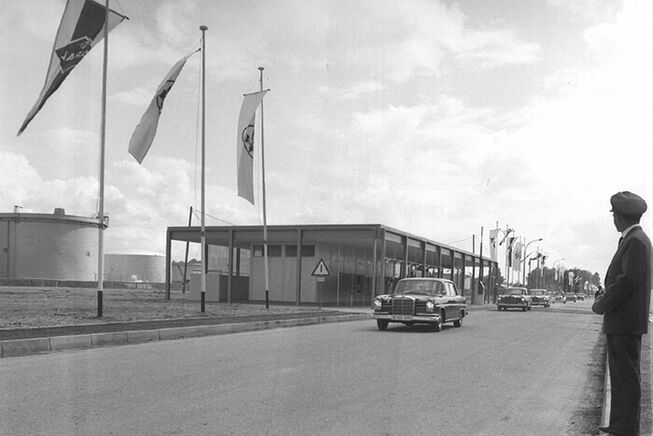
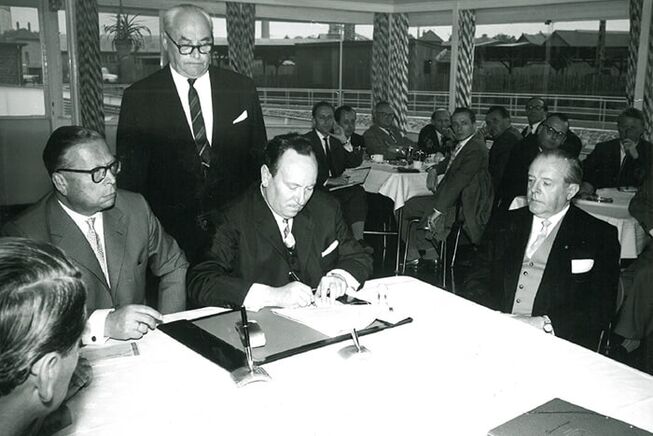
The Karlsruhe refinery site was founded in the early 1960s. At that time, in 1962/63, two immediately adjacent production sites, the Esso and DEA Scholven refineries (from 1969 Oberrheinische Mineralölwerke OMW), began operations almost simultaneously. In 1996, these two sites merged to become Mineraloelraffinerie Oberrhein GmbH & Co. KG (MiRO).

Milestones of this success story...

2021
2019
2018
2010
2004
2002
1996
1984
1967
1963
1959

Records during our anniversary

In the year of its 25th anniversary, MiRO is facing great things: During the planned and scheduled maintenance and repair turnaround shutdown in MiRO’s works 1, we also successfully implement the largest ever project scope in MiRO's history. These measures will significantly improve the energy balance and production efficiency in several key units, making MiRO truly "fit for the future”. The execution of the enormous turnaround scope and associated project scope takes place at the peak of the Covid pandemic, and yet the so-called "Event21" is a huge success - and an immensely important milestone on the path towards our future.

In October, we celebrate MiRO's 25th anniversary since the merger in 1996. With the founding of MiRO in Karlsruhe in 1996, the foundation stone was laid for one of the most competitive refinery locations in Europe. During the 25 years since then, around 350 million tons of crude oil have been refined into gasoline, diesel, heating oil and other modern high-performance products to supply the southwest with mobility and energy products. More than 2 billion euros of investments flowed into our "steel and iron".

And we are continuing our success story... It remains exciting!

"Refuels" – Rethinking fuels

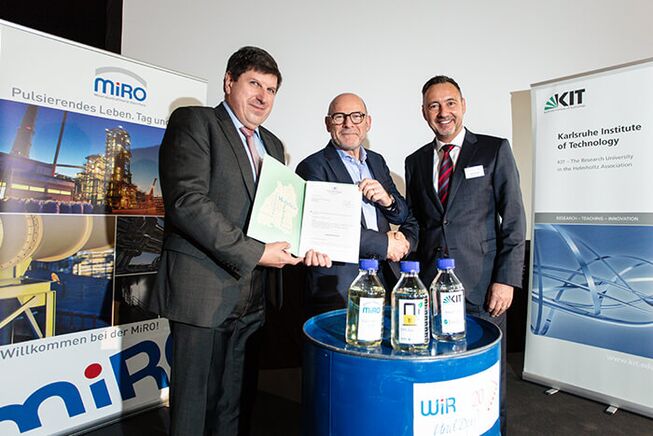
In January 2019, the joint project "ReFuels", funded by the state government of Baden-Württemberg, begins. Under the leadership of the Karlsruhe Institute of Technology (KIT), 25 well-known partners from the automotive and supplier industries are working together with MiRO to investigate the competitiveness and suitability of synthetic fuels for everyday use and how this new technology can be integrated into an existing refinery infrastructure. For MiRO, the start of the project marks the start of a series of numerous other future oriented projects that will deal with the transformation of the site into a sustainable future.

Commitment to the location

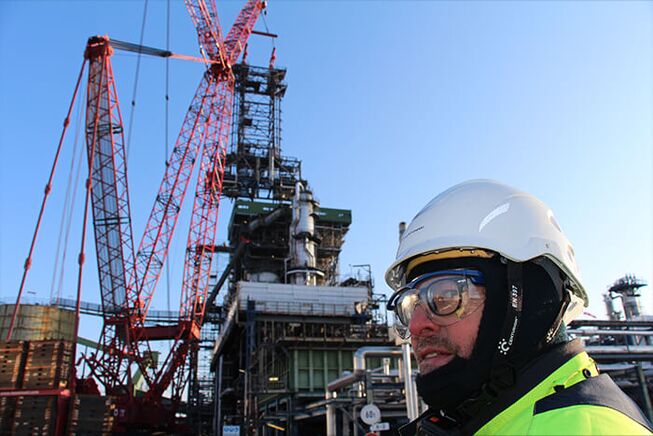
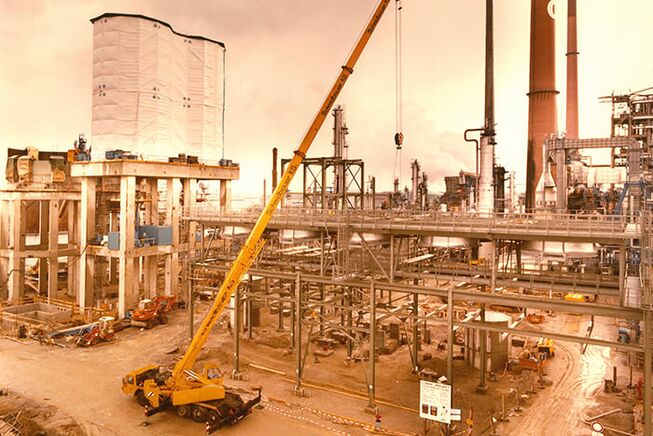
For around 75 million Euros, the "Delayed Coker" (DC) conversion plant is equipped with new, modern coke drums. This enormous investment represents a significant improvement in the refinery's competitiveness and is therefore also a clear commitment by the MiRO shareholders to the Karlsruhe location. In the DC plant, heavy residues from the crude oil distillation are converted into marketable products. The second largest cargo crane in the world is required and utilzed to install the two 35 m tall drums which weigh more than 400 tonnes each.

MiRO warms-up Karlsruhe

In 2010, together with Stadtwerke Karlsruhe MiRO launches the "largest environmental project of Karlsruhe". Since then, process heat has been supplied into the municipal district heating network. Today, more than 90 megawatts supply more than 40,000 households. Around 60 percent of Karlsruhe's district heating demand now originates from MiRO's production. This avoids around 100,000 tonnes of carbon dioxide emissions per year.

Organic is coming

Since September 2004, biocomponents – bio alcohol from agricultural production - are added to the Gasoline produced in Karlsruhe.

Sulphur-free fuels

Since November 2002, MiRO is producing only sulphur-free fuels, making it one of the first refineries in Germany to implement the third and final stage of the European Auto/Oil Programme (AOP) to reduce traffic-related emissions and produce modern and environmentally friendly fuels.

Two become one

In May, the merger of Oberrheinische Mineralölwerke GmbH (OMW) and the Esso refinery Karlsruhe is announced by the OMW shareholders and Esso A.G. Hamburg. The signing of the founding contract for Mineraloelraffinerie Oberrhein GmbH & Co. KG (MiRO) in October 1996 is an obvious economic consideration, because overcapacities in Europe combined with stagnating mineral oil product sales intensify competition.

Boosting investments

By the mid-1980s, almost 1 billion Deutsche Mark (0,5 billion Euro) have been invested in the construction of conversion plants for the conversion of heavy heating oil components into more marketable products such as Gas, Gasoline, Diesel and Light Heating Oil.

"Hunger" for mineral oil products is growing

After just a few years, the capacity of both refineries has to be doubled. The commissioning of the Transalpine Oil Pipeline (TAL) in 1967 made it possible to increase the supply of crude oil from Trieste accordingly.

"Feed in" for the first ton of crude oil

The press commented: "Oil city Karlsruhe: The former residence city has became an industrial centre – Karlsruhe's transformation has finally taken place through the refineries".

Birth of the "Oil City of Karlsruhe"

Due to the structural change in the German energy sector, the former dominant coal was increasingly replaced by crude oil. In 1959, Deutsche Erdöl AG (DEA) and ESSO AG therefore acquired two neighbouring properties near the Rhine from the city of Karlsruhe.

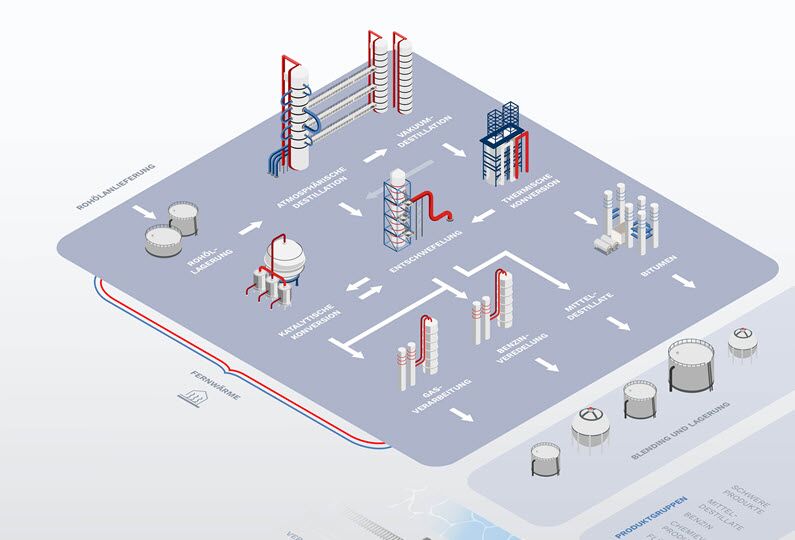
Learn more about How Refineries Work and the Products They Create

Understanding a Refinery

Read

Products of a Refinery

Read

Facts and Figures MiRO at a Glance

Founded October 1, 1996
Shareholding (in %)

  • Phillips 66 Continental Holding GmbH: Hamburg 18,75

  • Esso Deutschland GmbH: Hamburg 25,00

  • Rosneft Deutschland GmbH: Berlin 24.00 (Since 16 September 2022 under the trusteeship of the Federal Network Agency (BNetzA))

  • Shell Deutschland GmbH: Hamburg 32,25

Capacity 15.8 million tonnes/year
Employees 1.100 MiRO, plus around 700 from partner companies)
Size of the refinery site 458 ha
Supply
Crude oil origin Mainly from North Africa, Eastern Europe/Central Asia, Middle East
Delivery via pipeline Transalpine Pipeline GmbH (TAL), Triest
Processing Unit Capacities
Crude oil distillation units 14.9 million tonnes/year
Vacuum distillation units 7.2 million tonnes/year
Desulfurization units
  • for gasoline 4.3 Mt/year

  • for gas oils 10.8 Mt/y
Reforming units 2.4 Mt/Year
Catalytic cracking unit (FCC) 4.5 Mt/Year
Coker 1.9 Mt/Year
Steam generation 600 to 800 tons per hour
Power generation 60 to 80 MW
Products (2025)
Gasoline 4.9 million tonnes/year
Middle distillates (light heating oil, diesel fuel) 6.3 million tonnes/year
Bitumen 0.6 Mt/y
Propylene / LPG 0.5 Mt/y
Others (petroleum coke, calcinate, sulfur, etc.) 1.1 million tonnes/year
Tank storage capacities
Crude oil 730.000 m3
Products 3.900.000 m3
Shipping (2025)
Road 59.4 %
Rail 14.1 %
Waterway 25.2 %
Pipeline 1.3 %